
Water bottling capacity and quotation basis
Water Bottling Line Capacity: A Clear Basis for Your Quotation
A quote for 6,000 bottles per hour is incomplete without the bottle, product, operating conditions and counting point. Allot Tech helps buyers sourcing equipment in China turn a production target into a comparable supplier specification, from water treatment through final packing.
Review your bottle formats and capacity basis with Allot Tech
Direct answer
Ask for a capacity schedule for each approved bottle-cap-pack combination. Separate the machine's rated speed, the proposed complete-line output and accepted output over a stated period. Name the counting point, quality criteria, utilities, staffing and treatment of stops and rejects. A filler speed is not automatically a commitment for saleable packed water.
Water bottling capacity and quotation basis
Resolve four common capacity gaps before comparing prices
Give all bidders the same reference conditions. Mark an unconfirmed value as an open item, not as an assumed guarantee.
| Quotation problem | What to specify | Evidence to request |
|---|---|---|
| The same BPH is offered for different bottles | Identify fill volume, bottle geometry, neck, cap and pack with drawing revisions. Request a separate rate for each approved format; do not infer a 1 L rate from a 500 ml reference. | Ask for the offered model and configuration, format-specific speed conditions and a trial using representative approved samples. A broad volume range does not confirm equal speed across that range. |
| The filler runs fast but finished packs fall short | Define the contracted equipment chain and output counting point: filled bottle, accepted labelled bottle or completed pack. Check cap feeding, conveyors, inspection and packing as well as the filler. | Request a line balance showing limiting stations and any equipment supplied by others. At the agreed exit, record accepted output, stops and quality failures in the same run. |
| Shift output ignores cleaning, changeovers or rejects | State planned shift hours, planned exclusions, stoppages and quality losses separately. Clarify whether an efficiency factor already includes those losses before using it in the production calculation. | Use a shared time and count log with explicit denominators. Do not deduct the same stop twice or multiply an already accepted output count by a second quality factor. |
| The acceptance promise has no test conditions | Agree the bottle and product, utilities, staffing, run window, speed, quality criteria and stop/reject classification. Separate a factory test from installation-site acceptance where conditions differ. | Require the protocol, signed results and open-item list. A short peak-speed video is not evidence of sustained accepted line output; test duration and limits need project agreement. |
Put the capacity basis into the offer
Ask each supplier to distinguish confirmed commitments, design assumptions and items still requiring a sample trial. Record future expansion separately; it should not silently replace today's required output. Include a station-level stop log, compatible count units and a corrective/retest record in the supplier's response; leave unproven output assumptions visibly open.
- Send the bottle-cap-pack drawings, product conditions and target accepted output for each format, plus the intended shift schedule.
- Name the counting point, line boundary, utilities and operator duties; include any third-party machines or manual packing work.
- Agree the acceptance method, time and count logs, quality checks, exclusions and remedies for unresolved performance items before ordering.
Bottles per hour and litres per hour are different comparisons
These arithmetic examples are not machine ratings. Product flow equals bottles per hour multiplied by fill volume; actual machine speed must be confirmed separately. Treatment sizing also needs its own water balance, including applicable rinsing and cleaning demand.
| Illustrative bottle basis | Product filling demand | What the number does not prove |
|---|---|---|
| Example A: 500 ml at 6,000 bottles/h | 6,000 × 0.5 = 3,000 L/h | This is product volume only, not total raw-water demand or accepted packed output. |
| Example B: 1 L at 6,000 bottles/h | 6,000 × 1 = 6,000 L/h | Holding BPH constant doubles product demand; it does not prove that the offered machine maintains that rate. |
| Example C: 1 L at 3,000 bottles/h | 3,000 × 1 = 3,000 L/h | The same L/h as A still means a different bottle-handling and packaging rate. |
Calculate accepted shift output without counting losses twice
Illustrative log: during an 8-hour planned shift, the agreed counting record contains 40,000 total bottles, of which 1,000 fail the agreed checks. Accepted output is 39,000 bottles, or 4,875 per planned hour. Record stop causes separately; their effect is already reflected in the measured shift count. If the exit counter counts only accepted bottles, do not subtract rejects again. These figures explain the calculation, not the performance of an Allot Tech project.
What to do when the line misses the quoted output
Use the same bottle, run window and counting boundary for diagnosis. A higher speed setting is not a substitute for finding where usable output is lost.
1. Separate lack of supply from a blocked discharge
If the filler waits for bottles, caps or product, record the missing input and the first upstream stop. If filled bottles queue and the filler pauses, record the first downstream stop instead. Synchronize station clocks and distinguish the initiating event from machines stopped by its interlock. Ask the responsible supplier to review the approved material supply, utilities and interface logic. Do not bypass guards or increase speed to conceal the problem.
2. Convert pack rates before comparing counters
A packer reporting 10 packs/min with 12 bottles per pack represents 120 bottles/min, or 7,200 bottles/h, in a purely arithmetic example. It does not prove that the actual line achieves that rate. Specify complete packs, loose bottles, rejects and work in progress at the beginning and end of the test. Compare counters on the same time window; partially filled conveyors are not additional finished production.
3. Turn a failed trial into a repeatable corrective test
Keep the agreed conditions alongside the observed result: bottle revision, product, crew, utilities, counter readings, stoppage timestamps and quality failures. Identify each deviation, its owner and the action to check. Repeat under the agreed protocol after correction, rather than accepting a different bottle, shorter window or excluded stoppage without recording the change. Preserve the original result and the retest separately so the improvement can be traced.
Equipment scope
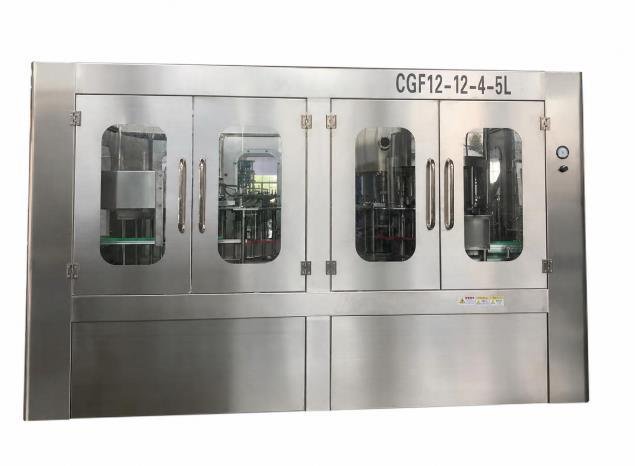
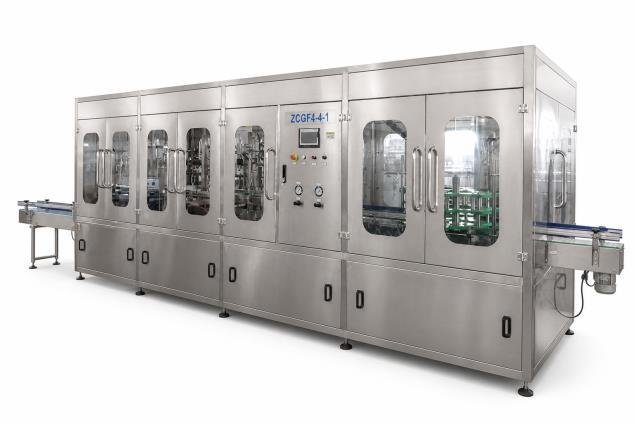
Machine images: Allot Tech Beverage Bottling Catalog 2026, page 20. They show equipment configurations, not verified capacity, efficiency or acceptance results. The applicable model, format-specific rate and project commitments must be confirmed in the quotation.
Questions about quoted water bottling capacity
Does 6,000 BPH apply to every bottle size?
Not without format-specific confirmation. Bottle height, shape, neck, fill volume, closure and pack can affect the proposed configuration. Ask for a capacity row and conditions for each approved format instead of copying the reference bottle's rate.
Is rated filler speed the same as guaranteed line output?
No. A rated machine speed and a contractual complete-line commitment have different boundaries. The offer should identify which is being stated, where output is counted and which operating and quality conditions apply.
How should we compare efficiency percentages?
Compare the definitions first: time base, counting point, ideal-rate reference and included losses. Availability, speed performance and quality are not interchangeable. Do not compare two percentages, or multiply factors, until their boundaries are clear.
Is there one standard acceptance duration or reject limit?
There is no single duration or limit supplied by this guide. Agree a project-specific protocol with representative materials, conditions, observations and reporting. Distinguish factory evidence from what must be proven after installation at your site.
Will a larger conveyor buffer fix insufficient capacity?
It may help decouple temporary stops, but it cannot remove a continuous throughput deficit at a limiting station. Request an accumulation and restart review for the actual layout, bottle stability and control sequence. Do not treat extra conveyor length as proof of a higher guaranteed rate.
Can we use the slowest machine's nominal speed as the line guarantee?
Only as an initial comparison, not as proof of accepted output. Ratings may use different bottles, quality boundaries or operating conditions. Normalize those bases, consider interactions and losses, then confirm the complete-line commitment through the agreed trial and counting method.
Related buyer guides
Next step