
Bottled-water treatment selection
Water Treatment Equipment for Bottling Plants
A bottling plant needs water treatment matched to its source and finished product, not a standard RO skid selected only by bottles per hour. Allot Tech coordinates equipment sourcing in China around your water report, production demand and agreed supply scope.
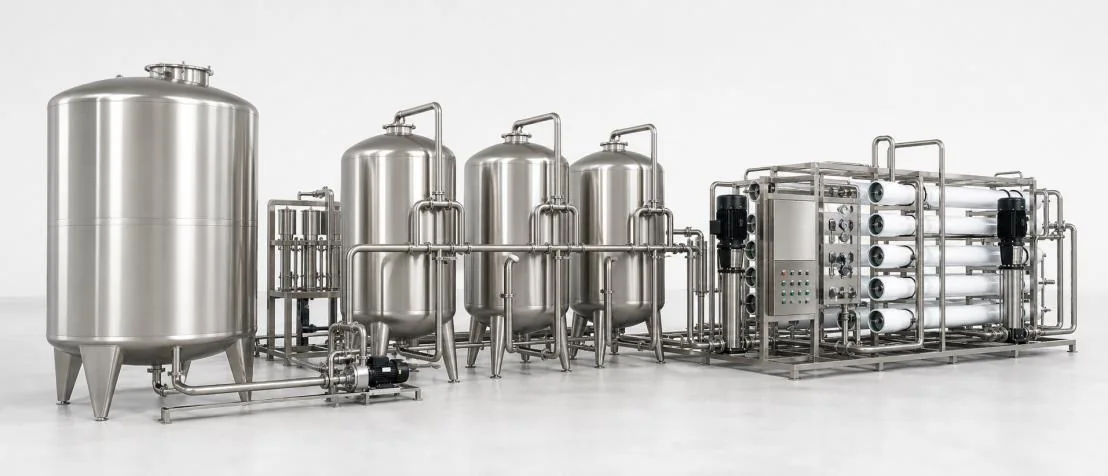
Direct answer
Start with a representative raw-water analysis and the intended bottled-water specification. Then compare pretreatment, membrane separation, storage and hygiene controls as one system. RO reduces dissolved salts; UF is not a substitute for desalination. Neither a clear-looking sample nor a low TDS reading proves that water is ready for bottling.
Bottled-water treatment selection
Which equipment addresses your water problem?
Use this comparison to frame a supplier discussion, not as a final process design. One source may need several stages; the order and duty depend on the test results.
| Problem or objective | Equipment to evaluate | What the quotation must clarify |
|---|---|---|
| Turbidity and suspended particles | Multimedia filtration, cartridge filtration or UF, depending on the particle load and downstream process. | State inlet limits, filter rating, pressure loss and backwash or replacement requirements. A particle filter does not establish dissolved-salt removal. |
| Chlorine, taste or odour concerns | Activated carbon where appropriate to the measured compounds and membrane requirements. | Specify the target substances, media, contact conditions and replacement plan. Carbon is not a blanket guarantee of microbiological safety. |
| Hardness and scaling risk | Softening or another engineer-selected scale-control approach before a sensitive membrane stage. | Provide hardness and relevant chemistry. Include regeneration or dosing needs and waste streams; do not select a chemical programme from TDS alone. |
| Purified water or mineral retention | Evaluate RO for dissolved-salt reduction; assess UF where particle separation without desalination fits the product. | Agree the final mineral profile and membrane performance basis. For mineral or spring water, confirm permitted treatment and product naming locally before selecting the process. |
Send these inputs before requesting a firm model
The catalog illustrates available equipment categories, not a universal train or guaranteed output. Ask the responsible process engineer to approve water targets, treatment stages, sanitation and acceptance testing for your project.
- Provide the source, sample location/date, laboratory report with units and seasonal variation; flag any missing microbiological or chemical results.
- Include pH, turbidity, conductivity/TDS, hardness and temperature, plus source-specific contaminants and the engineer's additional testing requirements.
- State bottle volumes, peak bottles/hour, daily shifts, rinse and cleaning demand, storage, available feed flow, power and drainage.
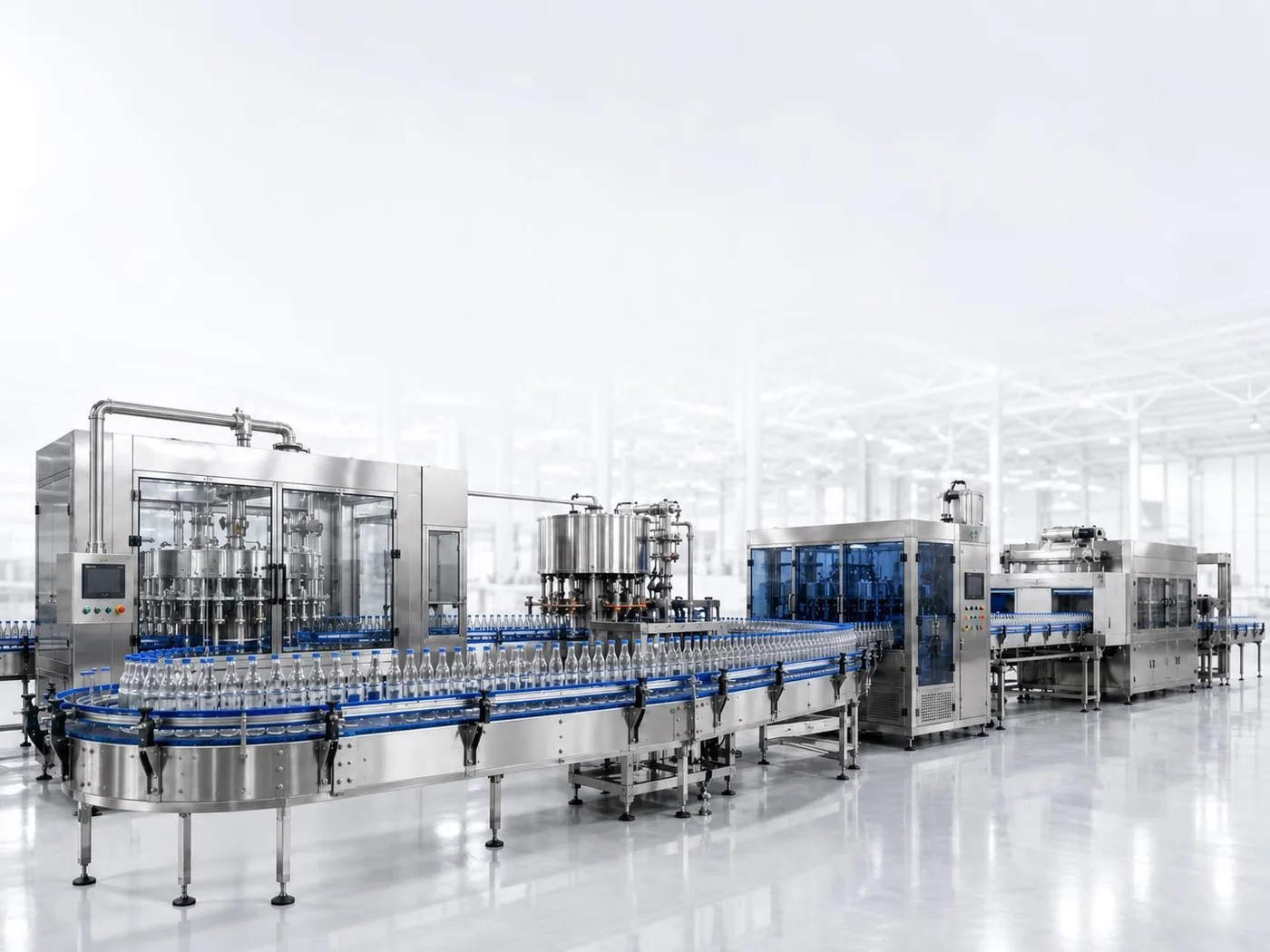
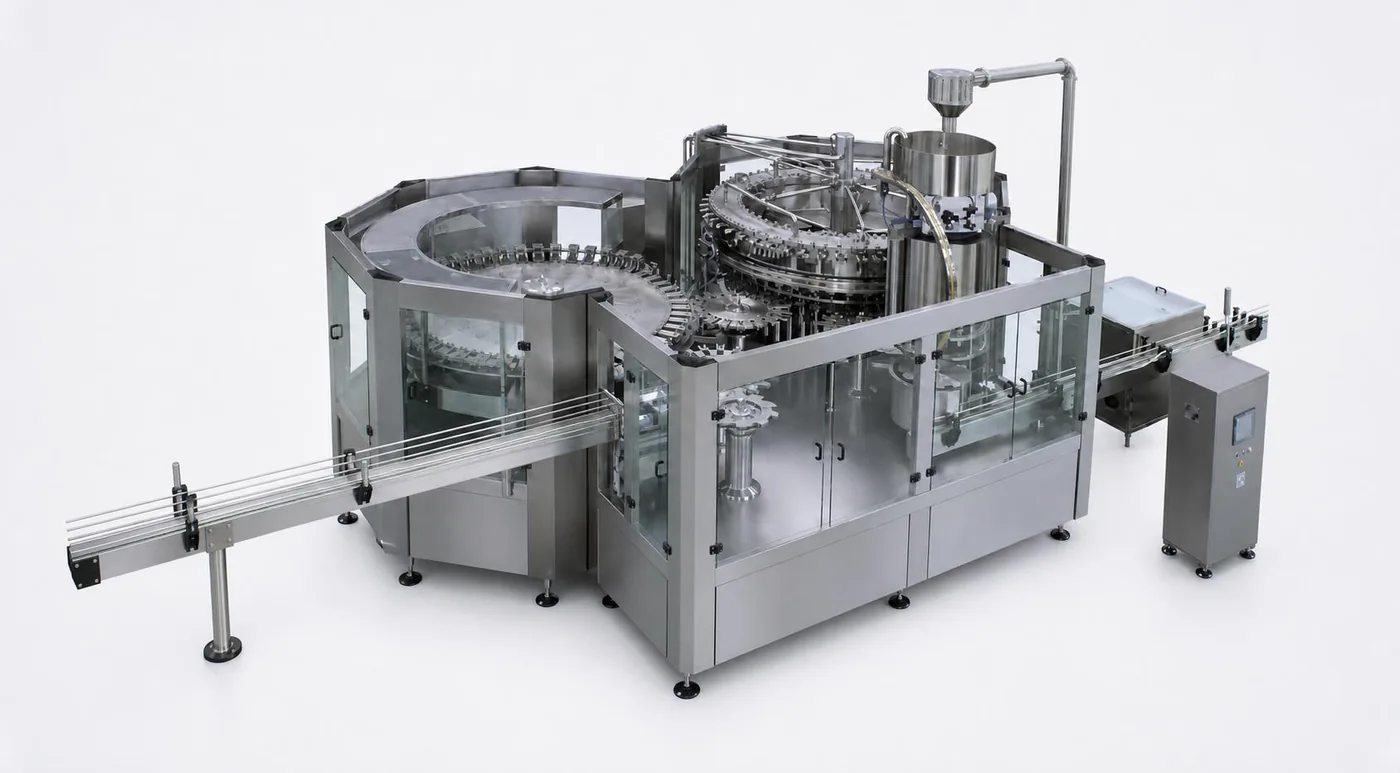
Equipment reference: Allot Tech Beverage Bottling Catalog 2026, pages 28–29. The bottle dryer on page 29 treats the bottle exterior, not the source water. General technology references below do not certify or endorse this project.
Equipment scope
Representative equipment reference. Final models and configuration are project-specific.
Bottling plant water treatment questions
Does every bottled-water plant need reverse osmosis?
No. The source chemistry and intended product determine whether desalination is needed. A mineral-retention project and a purified-water project can require different processes. Ask the supplier to explain the purpose of every proposed stage before choosing RO or UF.
What water flow does a 10,000 bottles/hour line need?
For a 500 ml bottle, the filling demand alone is 10,000 × 0.5 = 5,000 L/h, or 5 m³/h. This is an illustrative calculation, not an RO model recommendation. Add the actual rinse and cleaning loads, treatment losses and downtime; distinguish feed flow from usable treated-water output.
Why do water-treatment quotations differ so much?
One offer may cover only the RO skid while another includes pretreatment, tanks, transfer pumps, instruments and membrane cleaning. Compare the same source-water basis, temperature, recovery assumption and output target. Identify consumables, installation, commissioning, testing and local works separately.
If water changes after storage, should we add another RO unit?
Do not assume RO capacity is the cause. Have qualified personnel investigate the tank, vent, piping, cleaning and sampling points. UV, ozone or other hygiene measures need an engineered operating and monitoring plan; an equipment photograph is not evidence that the complete bottling process is validated.
Related buyer guides
Next step