
Returnable water bottle equipment
5 Gallon Water Washing, Filling and Capping Equipment
A returnable 18.9 L bottle brings a cleaning and inspection task as well as a filling task. Allot Tech coordinates equipment sourcing in China around your bottle samples, return conditions and required finished output. The final machines and services are confirmed in the project quotation.

Direct answer
Plan the route from returned-bottle inspection through cap removal, external cleaning, internal washing, filling and capping. Decide which steps are manual and which are supplied as equipment. A washer-filler-capper rating alone does not establish the output or hygiene performance of the complete operation.
Returnable water bottle equipment
Match the equipment to the problem arriving at your factory
Show the supplier representative returned bottles, not only a new sample. Agree the rejection rules and test conditions before selecting a QGF model.
| Problem to solve | Equipment and process to assess | Acceptance evidence to request |
|---|---|---|
| Returned bottles vary in dirt, damage and closures | Inspect and sort at intake; assess cap removal and external brushing before the internal washer. Separate rejected bottles from the accepted flow. | Record bottle material, neck, handles, labels and typical contamination. Define reject criteria with your quality team; do not assume the washer can recover every returned bottle. |
| Bottles look clean but the wash result is unproven | Review internal brushing where needed, spray coverage, wash stages, drainage and final-rinse arrangements. External brushing is not internal cleaning. | Qualified personnel should validate the cleaning programme, monitoring and sampling. Require evidence for residues and hygienic acceptance; visual appearance alone is not validation. This page does not prescribe chemicals, temperature or exposure time. |
| The filler is fast but finished output is low | Measure bottlenecks at inspection, decapping, washing, cap supply and discharge. Include manual loading, rejects and interruptions. | Use actual returned bottles in an agreed timed trial. Count acceptable capped bottles at the contracted exit, and report stops and rejects separately from nominal machine speed. |
| Leaking bottles or poorly seated caps | Distinguish an empty-bottle integrity check from a finished-bottle closure check. Verify bottle-neck and cap drawings, cap feeding and closing tooling. | Agree tests using actual bottle/cap combinations and defined handling conditions. Specify who supplies the checker and who closes defects; a photograph of a leak tester is not proof that every finished seal is accepted. |
Prepare a useful barrel-line inquiry
Request a station-by-station supply list and layout. Confirm dirty-to-clean flow, safe operator access and utility interfaces with the responsible project team before approving the configuration.
- Send new and representative returned bottles, cap samples and drawings, including material, dimensions, neck, handle and intended reuse conditions.
- State accepted bottles/hour, shifts, product-water conditions, factory space, loading/discharge method, power, compressed air, water supply and drainage.
- Agree factory acceptance materials, run duration, counting boundary, washing and closure criteria, rejects, operator tasks, records and unresolved exclusions.
Source: Allot Tech Beverage Bottling Catalog 2026, pages 21–22. QGF-100 is listed at 60–100 b/h for 18.9 L bottles, with a reference diameter of 270 mm and height of 490 mm. Specifications, current availability and final supply scope require project confirmation; the image illustrates a line configuration, not a guaranteed included package.
Equipment scope
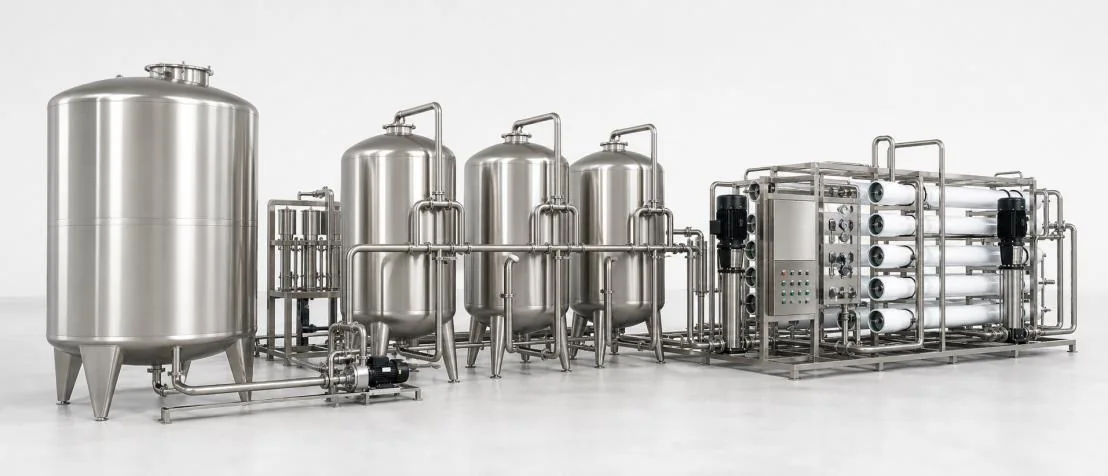
Representative equipment reference. Final models and configuration are project-specific.
5 gallon bottling equipment questions
Can new one-way PET bottles use the same washing process as returnable bottles?
Not automatically. A new one-way bottle and a returned reusable bottle have different incoming conditions. Confirm material, permitted reuse, dimensions and cleaning compatibility. The supplier and quality team must approve the process for the actual bottle rather than treating “5 gallon” as a complete specification.
Does QGF-900 mean 900 bottles per hour?
Do not infer output from the model number. Catalog pages 21–22 print 800 b/h for QGF-600, QGF-900 and QGF-1200. Ask for a project-specific explanation and verified performance basis before ordering; the repeated values have not been silently changed into different capacities.
How much water does 400 bottles/hour require?
At 18.9 L per bottle, filling alone would use 400 × 18.9 = 7,560 L/h. This is an illustrative demand calculation, not a model recommendation. Add the engineered washing, rinsing, cleaning and loss allowances; distinguish product-water demand from total feed-water and treatment requirements.
Does the quoted line include decapping, brushing and packing?
Only if listed. Identify inspection, decapper, outside and inside brushing, washing-filling-capping, cap treatment, conveyors, checking, bagging or rack handling separately. Water treatment, utilities, installation and training also need explicit boundaries. Catalog equipment illustrations do not make every item part of the base price.
Related buyer guides
Next step