
Water bottling line format conversion
Bottle Change Parts and Format Changeover for Water Bottling
A line advertised for several bottle sizes still needs a defined conversion package for your actual bottles, caps, labels and packs. Allot Tech coordinates equipment sourcing in China and helps turn that format list into supplier deliverables: identified parts, settings, instructions and acceptance evidence.
Review your bottle formats and conversion scope with Allot Tech
Direct answer
Give each approved bottle-cap-label-pack combination a format code. Ask the supplier to mark every affected station as unchanged, adjustable, requiring replacement parts or outside the quoted scope. Confirm part quantities, drawing revisions, setup settings and the trial that proves the line can return to acceptable production. A volume range or “quick change” label does not supply that information.
Water bottling line format conversion
Solve the problems that appear after a bottle change
Use one controlled format matrix across the filler, capper, labeler, conveyors and packer. It should show both what changes and who is responsible for supplying and proving it.
| Problem after conversion | What the supplier should specify | Acceptance evidence |
|---|---|---|
| The new bottle has the same volume but jams | Compare body profile, height, base, neck finish and support ring against approved drawings. Identify any format-specific guides, starwheels, feed screws, grippers or support settings for the offered equipment. | List part number, station, quantity and drawing revision for each required item. Run actual bottle samples through the complete contracted path and record jams, damage and rejects; equal volume is not equal geometry. |
| The cap changes and finished bottles leak or scuff | Check the bottle-neck and cap drawings together, including any liner or attached-cap feature. Have the supplier identify affected cap feeding, orienting, closing tools and settings for the proposed capper. | Agree closure and leak checks for the actual bottle-cap pair, using supplier and packaging requirements. Record accepted settings and restart rejects. Do not reuse another closure's tightening value without approval. |
| The filler converts but labels or packs fail | Include label dimensions and position, coding, inspection/reject settings, conveyor guides and final pack arrangement in the same format record. Identify work at upstream or downstream equipment supplied by others. | Count acceptable finished packs at the agreed exit and inspect their bottles, closures, labels and codes. Test the integrated format, rather than declaring success when the filler alone runs. |
| Parts arrive unlabelled or the old format cannot be restored | Request machine serial number, part identification, station position, format code, revision, quantities and storage method. Separate format tooling from wear spares and optional future-format engineering. | Check the delivered kit against its list, then demonstrate old-to-new-to-old conversion under an agreed procedure with trained operators. Keep the settings and open-item record; a box of unassigned parts is not a repeatable changeover package. |
Make format conversion part of the quotation
For each format, state which tooling and setup support are included, which are optional, and which are excluded. Confirm the approval drawings and sample deadline before the supplier fixes its design.
- Send drawings and samples for every bottle, cap, label and pack; assign revision-controlled format codes and mark future formats separately.
- Request station-by-station part quantities, shared versus dedicated items, settings, instructions, training and storage/identification provisions.
- Agree conversion conditions, operator roles, cleaning requirements where relevant, the stable-output criterion, accepted finished quality and documentation of stops and rejects.
A format matrix you can send with an inquiry
The following combinations are examples, not approved machine formats. Replace them with your drawings; the supplier fills in whether each station needs adjustment, shared tooling or a dedicated part.
| Illustrative format | Change to investigate | Supplier response required |
|---|---|---|
| Format A: 500 ml round PET, closure A | Initial reference bottle, label A and pack A | Identify the base tooling and settings included for this exact combination; record drawing revisions. |
| Format B: 1 L PET, same approved neck and cap as A | Body height/profile, label and pack may differ | Confirm each affected transfer, support, label and pack station. A common neck does not prove that all settings or parts remain unchanged. |
| Format C: 500 ml PET with closure B | Closure geometry changes although fill volume stays the same | Confirm neck-cap compatibility, feeding and closing tooling, settings and closure acceptance for the new pair. |
Measure until acceptable production is restored
Illustrative record: the last accepted bottle of the old format leaves at 09:00; mechanical adjustment finishes at 09:12; the agreed stable, acceptable output resumes at 09:25. The recorded changeover is 25 minutes, not 12. Define the start, finish, cleaning boundary, staffing and observation period in advance. Neither these times nor a supplier's single-machine adjustment time guarantees your complete-line changeover.
Equipment scope
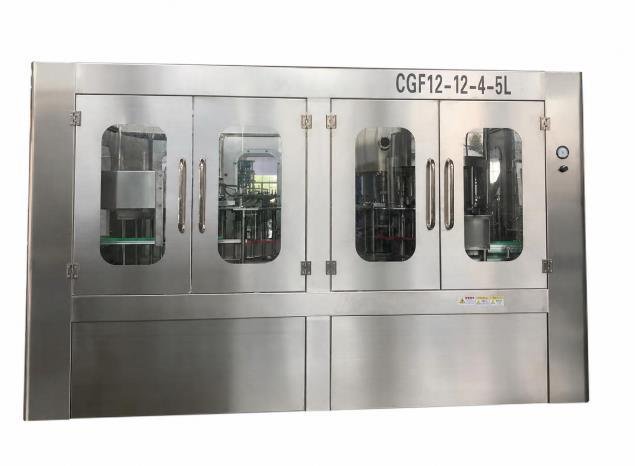
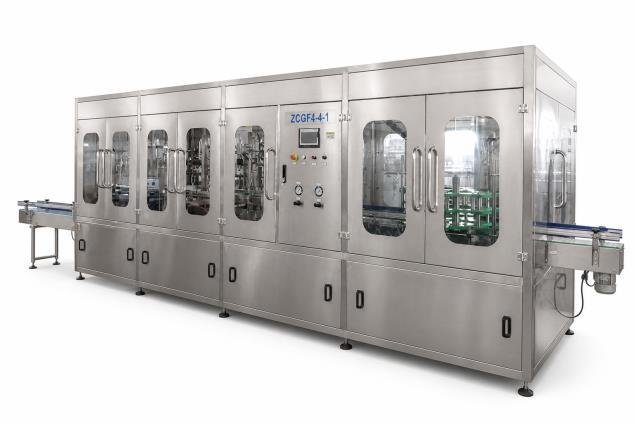
Machine images: Allot Tech Beverage Bottling Catalog 2026, page 20. They illustrate equipment configurations, not an included change-parts kit or automatic conversion capability. The final parts list, supported formats and services are confirmed in the project quotation.
Questions about bottle change parts
Do bottles with the same neck use the same change parts?
Sometimes some parts can be shared, but that must be confirmed by station. Body shape, height, base, labels, caps and packs can still require changes. Ask for a marked compatibility matrix rather than treating the neck drawing or nominal volume as approval of the full line.
What does a tool-free or automatic changeover promise cover?
It should name the equipment, formats, adjustment tasks and remaining manual work. Ask whether cleaning, cap clearance, material replacement, recipe selection and restart approval are included in the measured interval. Features advertised for another manufacturer's machine are not evidence of the configuration offered to you.
Are change parts the same as spare parts?
No. Format parts adapt the machine to an approved container or pack; wear and breakdown spares serve maintenance. List both separately with part numbers, quantities and intended use. If an item has both functions, state that explicitly so the quoted quantities are not counted twice.
What if we introduce a new bottle after ordering?
Submit its drawings and samples for a new compatibility review. The supplier should confirm required design work, parts, settings, tests, lead time and price impact in a revised offer. An unapproved future shape should not be assumed included in the original format range.
Related buyer guides
Next step